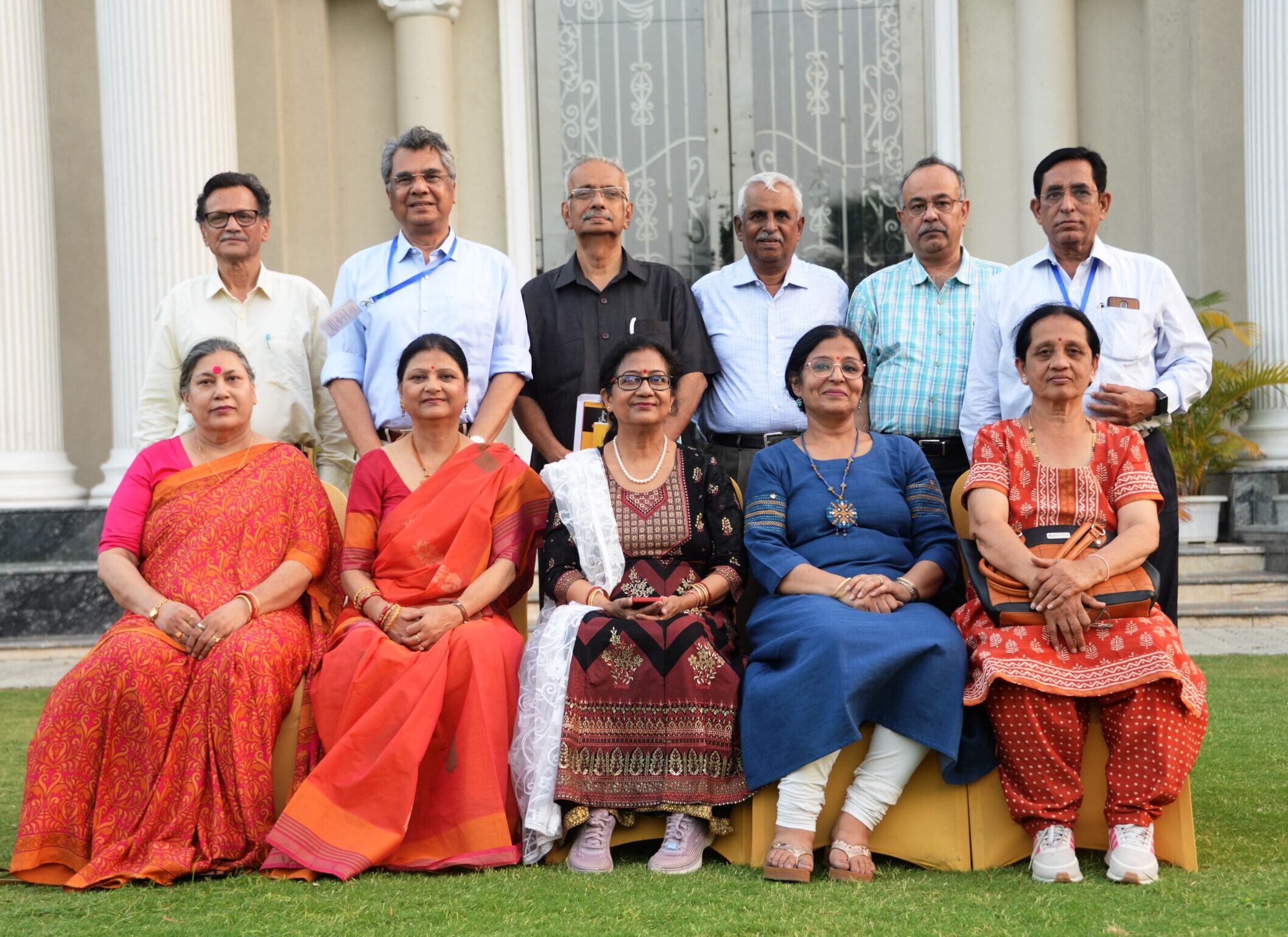

Text of an unpublished interview given by Dr. Yashpal Singh on Environmental Sustainability and Governance
1. Vision & Leadership
- How can science and sustainable development be harmonised to create lasting impact in today’s industries?
- What role should environmental consultancies play in shaping national and international sustainability agendas?
Sustainable development as adopted by the UN in 1992, seeks to strike a balance between development and environmental protection. It necessarily means that we must not use resources faster than they can regenerate themselves and we must not release pollutants in quantities, that nature funds it difficult to assimilate. Ironically, we are not in a position to ensure this. We have only one earth. Today, the 8.2 billion humans living on it are consuming more of its resources than it can provide. We are using up the renewable resources of 1.7 earths. Unless things change, we may need 3 times the earths resources by 2050 and if we consume resources and generate waste as in the U.S., we may need 5 earths to sustain the human population. This is too precarious a situation for the ‘Global village’ that the Earths is and needs intervention.
Science and Technology can contribute extensively to meet the ends of sustainable development. Some areas where work has been done and more is in progress are on the use of renewable sources of energy which help in the mitigation of greenhouse gases. Work has to continue on this.
We may also need to develop production technology that optimises the use of materials and energy and minimises the waste generation. Environmental audit should help in identifying the problems and developing clean and low waste producing technologies.
Science can use technologies for a better management of traffic movement. Information and communication technologies coupled with online virtual interactions have reduced the need for physical transport and may need to evolve further. Science has to contribute in the evolution of sustainable production technologies in order to meet the objectives of circular economy and net zero emission. I am not in favour of genetic modification of organisms but they do have a role in alleviating environmental burdens.
The pursuit of science endows on a person practicing it, a realisation of truth and an appreciation of moral values, beauty and goodness. Environmental consultancies need to examine the availability of good scientific options and recommend the most sustainable option, in line with the National and International sustainability agenda and radiate these moral values, truthfulness and beauty as perceived by Scientists as they pursue their own work interests.
2. Innovation & Technology
- Which cutting edge technologies are redefining pollution control and environmental monitoring today?
- How does proprietary R&D at ?—– translate into practical solutions for communities and industries?
Considerably advanced technologies exist for pollution control. In terms of air pollution you have electrostatic precipitators, scrubbers, catalytic converters, air purifiers etc. Water Pollution control technologies have also developed fairly well and include Membrane filtration, Advanced oxidative processes (Where the OH– ion is used to degrade organic pollutants including persistent organic pollutants in water), bio remediation and constructed wetlands. Soil contamination is a major issue and technologies for treatment include soil washing, thermal desorption, phytoremediation and Insitu stabilisation. Some beautiful technologies have evolved for the management of Hazardous substances found in ground water and soil. They include Bio remediation, phytoremediation, permeable reactive barriers, thermal remediation, steam enhanced extraction, soil vapours extraction, soil heating, vitrification, vacuum extraction, hydraulic fracturing, Radio frequency antenna heating etc. Integration of these technologies with good management practices and good governance can lead to a brighter future. With sustainability now being the key word, technology needs to evolve more in terms of supporting circular economy, carbon reduction, net zero emissions, waste minimisation, recycles and reuse and in an efficient resource utilisation.
India is already committed to fostering a circular economy that prioritises resource efficiency and environmental protection and rests heavily on the waste to wealth initiatives. Some important initiatives have been the conversion of waste cooking oil to biofuel and the use of steel plant slag in road construction. In order to facilitate energy transition in the country, India is also committed to the development and deployment of energy storage systems. Non fossil fuel-based energy is now planned to constitute 50% of the cumulative installed power capacity.
Environmental monitoring has an important role to play is sustainable development. The Indian Institute of Technology, Kanpur has established a Centre of Excellence for Air Quality monitoring which will develop indigenous low-cost sensors and Artificial Intelligence/Machine learning to enhance the capacities of air quality monitoring and source apportionment. The integration of advanced technologies AI, Internet of Things (IoT), remote sensing and biotesting has brought about a major transformation in environmental monitoring. These tools provide real time data and allow making predictions important for initiating appropriate interventions towards a better environment.
I understand that your Research and Development wing has developed efficient testing Kits for soil, water and fertilisers. I am sure that they would go a long way in simplifying monitoring and I am also sure that you would, in future, also engage in R&D activities which focus on efficient utilisation of resources and waste minimisation.
3. Compliance & Governance
- Why is timely compliance with environmental regulations not just a legal necessity but a business advantage?
- How can organizations move beyond “minimum compliance” to embrace environmental stewardship as a core value?
I have always felt that a robust environmental compliance is a great business advantage. You do not foul air, you do not foul the water, your neighbours are happy. There are no public complaints. Your Corporate Social Responsibility plans look to people’s welfare. You provide for drinking water, for clean air, for nice aesthetics, strengthen the schools, provide for medical aid and infrastructure for hygiene in Schools. Your neighbours love you. If the effluents and emissions are within norms you face lesser interruptions in the manufacturing schedule. By a judicious use of resources, you save wealth and by minimising waste you save on costs of treatment. It is sheer business advantage. Public trust invites more share-holders and investors. We had carried out an environmental performance rating of the distillery sector in U.P. and found out that the sector would improve its earnings substantially if the bad performers could only emulate the good performers. It is time for us to realise that non-compliance is often more expensive than compliance and the good will earned by the compliant enterprise is a big business advantage.
Organisations can certainly try to go beyond compliance in their pursuit for excellence. The ‘Charter’ development program of the CPCB is an example where the regulator and industry have discussed ways and means to go beyond compliance and have voluntarily adopted the recommendations of the charter. A charter is in place for the 17 categories of highly polluting industries. Organisations may also examine the advantages of reduced resource utilisation and reduced waste generation per unit product. This will ease the pressures on waste management in order to move beyond compliance. Importantly industries need to share notes so that the bad performers could learn from the better performers and in corporate best management practices.
4. Global & Local Impact
- What lessons can India’s environmental projects offer to international partners, and vice versa?
- How does a pan India presence combined with international collaborations strengthen our consultancy’s ability to deliver holistic solutions?
India has made considerable progress in the past decade but we have still to go a long way. India is not good in environmental performance. The gap between waste generated and the wastes treated is considerably high. India with a score of 27.6 ranks low in environmental performance, being positioned 176 out of 180 countries in 2024. It is better only to Pakistan, Vietnam, Laos and Myanmar. Air quality, waste emissions and ecosystem management appear to be major areas of concern. However, the investment in renewables and the net zero goals place it better in terms of climate change management. The large population is putting a strain or resources and creating more waste. India is facing enormous environmental pressures and I would feel that we have still to learn from our international partners who are doing well in Environmental Governance. It is a bigger issue involving good governance and policy interventions in managing scarce resources in a sustainable manner for our ever-growing population. I would strongly advocate that we should introspect and rather than trying to spread knowledge, learn from the better performing nations and examine the utility of these learnings in managing India’s Environment. Consultancies may play an important role by generating high value, representative data and serving as whistle blowers.
5. Future Outlook
- What environmental challenges will define the next decade, and how should consultancies prepare to address them?
- How can education, training and awareness programs empower the next generation of environmental professionals?
For India, I think the next decade would continue to present problems related to severe air and water pollution, access to adequate healthcare, water scarcity, waste management, biodiversity loss, deforestation, extreme weather events, land degradation and the sustainable utilization of degraded lands. The biggest concern would be a scarily of resources to meet the growing population numbers and its related consequences of unplanned growth and the generation of more waste than can be handled.
Not only consultancies but every citizen of India has to prepare to address to the issues. I once again reiterate that good governance can improve environmental performance considerably even with the same resources. Environmental conservation has to develop as a culture. Every citizen including industry, consultants and the regulator should introspect within their conscience and be more truthful. There is a need to regulate urbanisation and empower the rural hinterland to restrict rural migration. Unless we give to nature more than we take from it our existence is not sustainable. As it is, India consumes 70% of the earth resources. We must relate this with the growth in numbers and somewhere take a conscientious decision that enough is enough.
6. Pollution Control Board
- Do you think that approach of pollution control boards at state, Union territory and central levels needs to be more aligned and up scaled with contemporary Environmental challenges. Kindly elaborate?
- What areas need more attention and momentum which are untouched at pollution control board level?
The problem with the Pollution Control Boards is that they have too many responsibilities and too much of power but are not adequately staffed. The increased public awareness and associated litigation keep most of the Boards busy and under pressure. Importantly a major part of this litigation relates to industrial pollution which is only a small part of the pollution load as evidenced from source apportionment studies. I thank that the Boards have evolved more as Industrial Pollution Control Boards and may need to examine this stance. There appears a need to provide dedicated administrative capabilities to carry out source apportionment studies and address to all the other sources of pollution as may be indicated through such studies. This could be separate from industrial pollution control divisions. Compliances could be made simpler so that it does not foster evasion. With its limited resources, I think the Boards may have to decide that in ensuring compliance to conditions which conditions are critical and decide penal action accordingly.