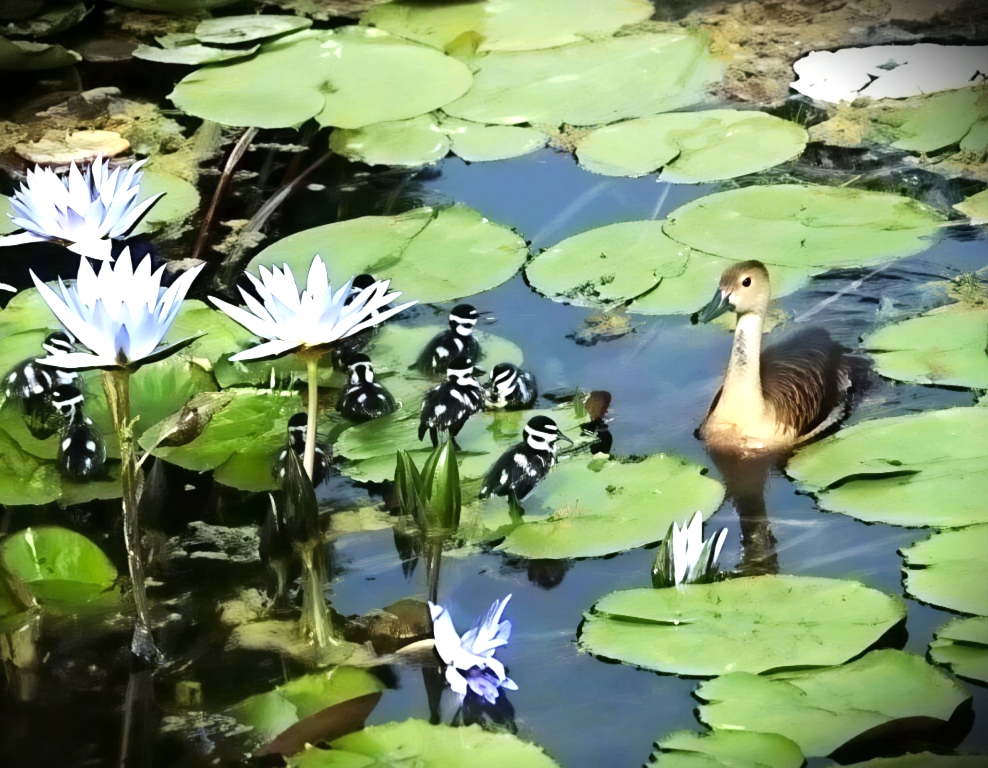

Lesser Whistling Duck/Lesser Whistling Teal (Dendrocygna javanica)
- Size of a domestic duck
- Differs from the “Large Whistling Duck” in having a chestnut rump (upper tail coverts) as against a creamy white in the larger whistling duck.
- Produces a whistling sound when in flight. The outer most primary feather has the inner vane modified and it is claimed to produce the whistle while in flight.
- They are usually gregarious. This was a solitary bird with its chicks. The partner was not observed.
- Sexes are similar.
- A species of least concern distributed widely in Bangladesh, India and Sri Lanka, East to South East China, South to South East Asia to Sumatra, Borneo, Java and Bali.
- Generally found on small bodies of water surrounded with trees which are used as roosts and for building nests. This specimen with its brood, was observed in a reservoirs within the urban units of Lucknow, U.P. India.
- Mostly feeds early morning, evening and in the night on grasses, seeds and shoots but occasionally on small molluscs, small fish, frogs and worms.
- Usually found in flocks or in pairs. This specimen observed as a solitary bird with chicks in city limits. No other individuals observed in the neighbourhood.
- Nest generally on trees but often on ground provided there is enough cover of grasses and reeds.
- Clutch size usually 7 to 17 on an average 10.
- Incubation is by both sexes and both sexes lead the young
- During the moulting period, lesser whistling ducks undergo a natural process in which they become flightless and may select specific locations to moult which may provide safety from predators and have adequate food resources.
©Srimaa Communication
Credits- Dr. Yashpal Singh, Mrs. Neena Singh, Mr. Manoj Kumar Yadav