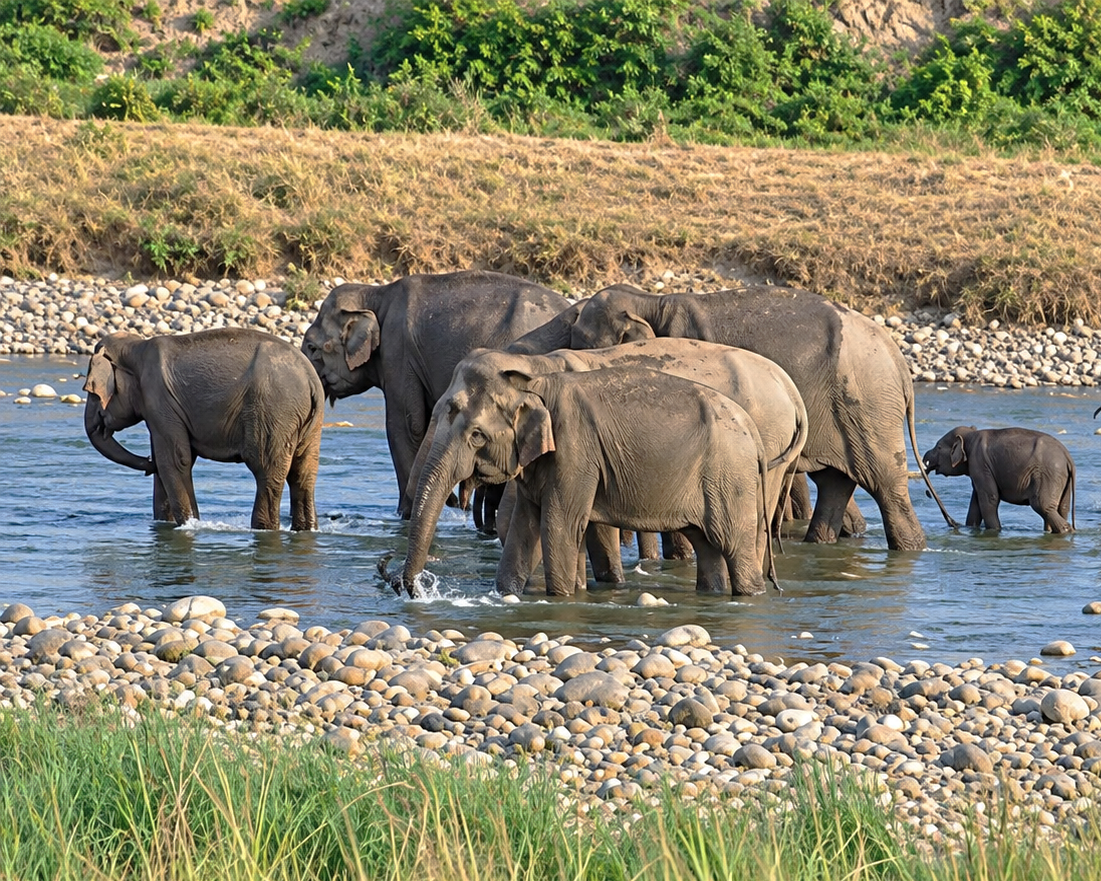

Sweating, Cooling, Water Intake, Hydration and Bathing in Elephants.
Elephants move long distances in search of water by using spatial memory. They can locate water sources even though being many kilometers away from the source. Elephants possess very few sweat glands and the only sweat glands are present around the toe nails. Ears and the skin assist in cooling the body and maintaining the body temperatures at about 360C.
An elephant’s ear can stand almost 6 feet tall. With paper thin skin on the ears, flapping of the ear lobes cools the blood flowing in the veins. Splashing water on the ears makes the cooling more efficient. Elephants also have about 15 hotspots in on their skin. These are small patches of skin which can dilate blood vessels, on demand, to dump heat. Combined with bathing, these help maintain the temperatures. In winters, the opposite happens. Elephants close these patches, hold their ears still and flat against the head to minimize heat loss.
The Elephants skin is very thick and wrinkled. Wrinkles trap the moisture and keep the skin healthy in dry weather. Bathing helps in moistening the skin. Wrinkles also increase surface area which helps in thermal regulation. The skin is movable and the wrinkles may open up to make the skin permeable and release heat through the permeable skin. Sweat glands are absent.
When the weather is warm, elephants may lose up 10% of all the water stored in their bodies in a single day. They need to drinks water frequently to avoid dehydration. Once a day is the preferred need. Once every 2 to 3 days protects from dehydration. Elephants have however been reported to survive as long as 15 days without water.
Elephants can drink up to 200 liters of water a day and prefer water holes with high mineral content, specially Sodium. The distribution of elephants can be correlated with the location of water bodies with high mineral contents. They will not drink from any water hole.
When water is scarce elephants dig holes in dry stream beds to get at sub soil water.
©Srimaa Communication
Credits- Dr. Yashpal Singh, Mrs. Neena Singh, Mr. Rajesh Bedi and Mr. Manoj Kumar Yadav