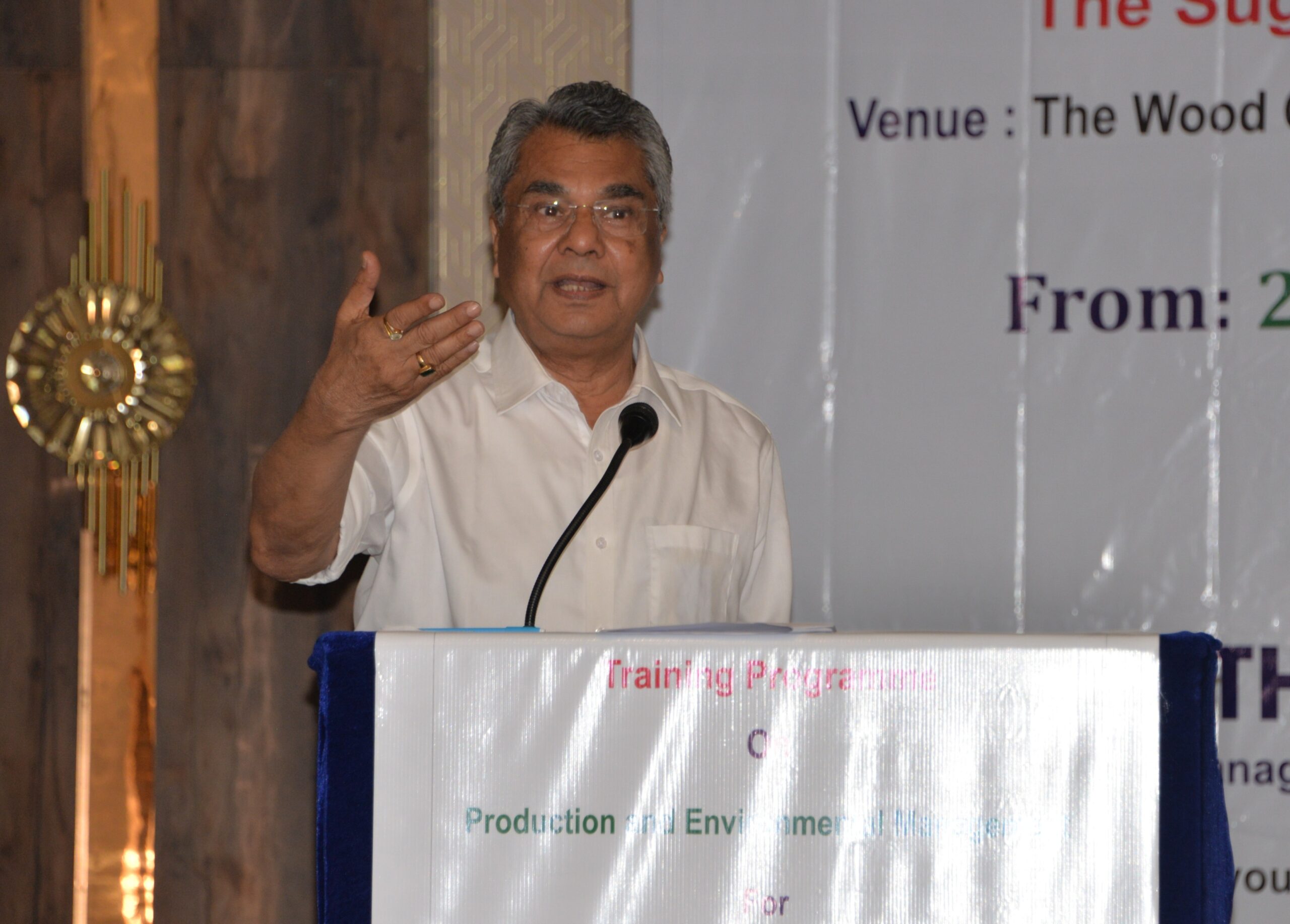

Resource Inadequacies, Lessons from Nature and Circular Economy in Sustainable Development
By Dr. Yashpal Singh
Chairman, The Wealthy Waste School India
Former Director Environment to the Government of U.P.
The economy of nature operates in a very fascinating way. The Lord Almighty is the biggest creator, yet he has not created anything that does not give off waste. However, in a most beautiful way, he has fashioned nature to enable the waste of one to become the resource for another.
Through its billions of years of evolutionary history, the earth has taught us this beautiful lesson of a cyclic waste – resource relation. Myriads of life forms are contributing to provide sustaining ecological services. These are mostly based on cycles. The Carbon Cycle, the Nitrogen Cycle, the Water Cycle, the Nutrient cycles etc. Man is a parasite and completely dependent on these services for sustenance.
Interestingly natures economy is not linear. Everything in nature has a utility and is put to use by natures laws. Nothing is a waste. Natures consumption is mindful and deliberate and not mindless and destructive. This helps it to create a diversity that builds resilience.
India’s current economic model is linear. Resources are extracted, processed, transformed to products, sold used and discarded as wastes.
Mindless resource consumption and reckless waste disposal is the genesis of almost all environmental related problems including deteriorating air quality, water quality, health impacts, resource inadequacies, climate change and what not.
Sustainable economic models need to develop round, robust resource and waste management strategies in which we may have to take an inspiration from nature, provide for maximum recycle and reuse, depend more on clean and renewable resources and develop diversity to provide resilience.
Resource inadequacies are a matter of critical concern. We have only one earth. Today the 8.2 billion people on it are using more of its resources, than it can provide and gobbling up the renewable resources of 1.7 earths. Unless things change, we may need three earths by 2050. If we consume resources and generate wastes as in the United States we may need 05 earths to sustain the human population. We may need 70% more food by 2050. This would mean more agriculture. More agriculture would mean more extinctions. Currently 80% of extinction threats to animals are from agriculture.
India’s present consumption of resources is equal to a resource requirement of about 0.7 earths. This will increase as we progress to stand in line with the developed world. Our resource consumption and waste generation would grow up. For a good quality of life as envisaged in developing countries, the earth cannot support more than 2 billion people. Water is another critical resource. The Global per capita availability of water has decreased from 5177 cubic meters in 1951 to 1341 cubic meters in 2025 (estimates). The UNEP regards a per capita of 1000 to 1700 cubic meters per person as an indicator of water stress. Nearly 5 billion people are expected to live in water stressed cites by 2050. India is one of the most water stressed with 1423 M3/person. Most countries are in deficit in terms of Resources vs. Ecological Foot prints.
India, with a population of 1.45 billion has a population density of 488 persons per square Kilometers as compared to 151 persons in China, 28 in U.S., 9 in Russia and 03 in Australia. Population regulation is certainly a priority for sustainable resource management.
Given, the precarious position of resource consumption and waste generation in a linear economy, steps have been taken to transform India’s development to a pattern based on circular economy. There is a need to further step up the momentum through technology and process innovations that keep products and materials in circulation through better maintenance, reuse, refurbishment, remanufacture, recycling, composting, using treated waste in agriculture and regenerating nature and returning the nutrients from bio-degradable materials back to the earth.
At the current pace of economic development, India is likely to triple its demand for resources by 2030
It is estimated that transitioning to a circular economy will result in economic benefits worth 624 billion U.S. dollars and reduce Carbon emissions by 44% in 2050 alone as compared to the current development path. A circularity report of 2023 estimates that only 7.2% of the global economy is circular. It is constantly falling from 9.1% in 2018 to 8.6% in 2020 and 7.2% in 2023. A circular economy can reduce up to 30% of total material used to fulfill our present needs. The transition to a circular economy can bring significant benefits to India ranging from environmental conservation to economic growth and job creation. The council on Energy Environment and Water (CEEW) has suggested that processing just seven kinds of wastes plastic waste, organic waste, Lithium car batteries, electrical and electronic equipment waste (e-waste), end of life vehicles, used cooking oil and used water could establish an annual market for India worth Rs. 11.5 Trillion by 2047. This is also likely to create a full time employment for 8.4 million and attract Rs. 10.8 trillion in investments.
As per another estimate, a circular economy has the potential to create an annual value of Rs. 14 Lakh crores in 2030 and Rs. 40 Lakh crores in 2050 compared with the current development scenarios. Cost savings would amount to 11% of the Indian GDP in 2030 and 30% in 2050.
Some Sector wise scenarios
Treated Waste Water
Sector wise, treated waste water can be used as a resource in agriculture, industry, commercial cooling, construction, road cleaning, park maintenance and other non-potable uses. This is expected to unlock almost Rs. 3.08 trillion in economic activities by 2047 creating over a lakh jobs. The nutrients in treated waste water could act as a natural fertilizer replacing the chemical fertilizers.
Deterioration of soil is a natural trend in India. India loses 0.8 million tons of nitrogen, 1.8 million tons of phosphorous and 26.3 million tons of potassium annually. This increases the dependence on chemical fertilizers.
The current practice of zero liquid discharge (ZLD) through evaporation is very unsustainable in terms of the energy and water foot print and the associated loss of nutrients. The National Green Tribunal in India has also passed directions that ZLD should not be prescribed across the Board but may be considered on a case-to-case basis. The imposition of ZLD may be rethought and the use of treated effluents for irrigation and fertilization promoted.
Millions of rupees, water and nutrients are being lost in concentrating and incinerating distillery spent wash which could otherwise, as per an earlier CPCB protocol, be used as manure for pre-sown land application (One time-controlled land application) and for reclamation of sodic lands which has great potential in India. This will reduce the costs of treatment, save water and nutrients and help recovering millions of hectares of sodic land in India. Use of spent wash in agriculture is being practiced in Australia, Mexico, Brazil, Japan, Romania and many other countries as a sustainable model achieving considerable savings on water and fertilizers and treatment costs.
ZLD across the Board, may also interfere with the minimum flow regime of water bodies and may need to be reviewed for augmentation in water supplies. Every river has a natural self-cleansing system.
Agricultural Waste
India generates almost 220 MMT of surplus agricultural waste per year. Most of this is burnt which causes major air pollution problems.
Burning just one ton of Paddy straw release 3 Kilogram of particulates, 60 Kg of carbon monoxide, 1460 Kg of Carbon dioxide, 199 Kg of Ash, 2 Kg of SO2 and 0.58 Kg of Carbon Black. Converting Agricultural Waste to reusable products would make the process circular. Paddy straw and other farm wastes can be processed into compressed biogas. Crop residues can also be turned into sustainable packaging materials, replace single use plastic products and be converted to fiber panels for building insulation. Bio bitumen and biochar are other circular products from the Agriculture residue wastes. Biochar generates high value CO2 removal credits which are saleable. Segregation and transportation of Agricultural residue waste is however a major concern.
Municipal Solid Waste
Circular economy pathways available for municipal solid wastes include composting the wet waste or converting to biogas, recycling waste paper, plastic and metals for use as raw material for further products and processes.
With almost 62 million tons per annum municipal solid waste available, a market of 50.6 million US dollar could be created along with 2.6 million jobs.
Around 50% of India’s MSW is bio degradable and can be processed to Biogas and compost. A major part of MSW, about 17% goes unaccounted to drains or is burnt. Managing, MSW properly can lower air emission, reduce pressure on land-fills and urban land and create jobs.
India’s Municipal Solid Waste handling capacities have imposed tremendously since 2014. The Swachh Bharat Mission has seen an increase in waste collection efficiencies which are almost 96% now. The waste processing has also increased from 18% in 2014 to 60% in 2022. Segregation and market development for end products are two major gaps which need to be taken care of.
Textile Wastes
India generates about 7 million tons of textile waste every year. Out of this 42% is pre-consumer waste generated during processing and 58% is post-consumer waste consisting of discarded garments. Circularity can be introduced in textile wastes by increasing longevity and recyclability. Post consumer waste may be handled through a better segregation and recycling with transforming textile wastes into new raw materials. This may significantly lower the textile industry carbon foot print and reduce pressures on land and incinerators.
Solar Waste
India is expected to generate 0.5 million tons of solar waste between 2025 and 2030. This is likely to have a potential market value of 384 million U.S. dollars in 2047. India plans to achieve 60% cumulative electric power installed capacity from non-fossil fuel-based energy sources. This ambitious target would generate about 11,221 kilotons (11.22 MMT) of Solar Waste by 2047 including, production wastes and discarded solar cells. The waste Solar cells can be dismantled and processed to recover Aluminum, Glass, Copper and materials like silicon and silver. Despite this huge potential only 1980 tons of solar waste were recycled in India in 2025-26. Solar wastes are regulated India through the E. waste management rules 2022 which mandate Extended Producer responsibility but there are no E.P.R. obligations for solar wastes. Producers are only required to store the waste generated until 2034-35. This may impact progress in recycling. The CPCB guidelines of March 2026 define the responsibilities of producers, manufactures and other stakeholders in collection, transportation, handling and storage to minimize damage to solar waste and enable recovery.
Lithium ion batteries
One of the biggest areas of concern is the disposal of Lithium-ion-battery waste expected to be generated in huge quantities in the coming times. India aims to achieve 30% of all new vehicle sales by 2030 to be replaced with Electric vehicles needing about 236 GWH of battery storage by 2031-32 and a matching demand of Lithium-ion batteries and Lithium-ion battery waste management facilities.
By 2047, India may generate about 14,260 KT of lithium-ion battery waste. With a weak indigenous battery management sector (Just 2.8% of requirement) and the 100% dependency on imports for Lithium, Cobalt and Nickel and about 60% on graphite, it is important that the sector fast develops facilities for producing and recycling lithium-ion batteries in India.
The circular economy life cycle for lithium ion batteries aims at examining the used batteries to see whether they can be put to any less demanding alternative uses, thus prolonging their life.
Fully degraded batteries can be processed to recover metals including Lithium, Cobalt and Nickel and supply these to battery manufactures. This may create a market Opportunity of 5 billion U.S. dollars in 2047 and create almost 72800 full time employment opportunities by 2047. The battery waste management rules of 2022 have fixed recycling and material recovery targets for using recycled content in new batteries. Incentive schemes have also been launched. Despite the imperative need for using recycled material in India-a significant share of the minerals recovered after shredding lithium-ion batteries, is being exported being more lucrative. A suitable domestic market needs to be developed by fast tracking of indigenous battery manufacturing units.
Initiatives
The various Extended Producer Responsibility obligations and the mandate to use a mix of virgin and recycled raw materials under the rules pertaining to the management of plastics, e-wastes, construction and demolition wastes and used batteries as prescribed by the MoEF and CC have been designed to achieve this circularity for sustainable economic growth.
The Government has also identified 11 (Eleven) focus area. These include Municipal Solid and Liquid wastes, scrap metal, electronic wastes, Lithium ion batteries, solar panels, gypsum, toxic and hazardous industrial waste, used oil waste, agricultural waste, type and rubber recycling and end of life vehicles. High powered committees have been constituted.
‘The Life Style for Environment-Life Movement’ introduced by the Honorable Prime Minister promotes an environmentally conscious life style that focusses on ‘Mindful and deliberate utilization’ instead of ‘mindless and destructive consumption’.
The key concepts involve reduction, reuse and recycling along with circular economy.
A circular economic development path is expected to lead to a significant reduction of Green House Gas emissions by 23% in 2030 and 44% in 2050 as compared to the current development scenario. The consumption of environmentally damaging synthetic fertilizers, pesticides and the use of water and other virgin resources would decrease.
Suggested Readings:
- Guidelines for Storage and Handling of Waste Solar Photo-Voltaic Modules or Panels or Cells under E-Waste (Management) Rules, 2022
- https://zenodo.org/records/18884661
- https://www.teriin.org/event/circular-economy-path-sustainable-lifestyle
- https://www.ibef.org/research/case-study/sustainable-circular-economy-in-india
- https://www.ceew.in/blogs/what-is-india-circular-economy-market-potential
- https://eacpm.gov.in/wp-content/uploads/2023/07/17-Indias-Tryst-with-a-Circular-Economy.pdf
- https://www.wealthywaste.com/life-style-for-environment-and-green-credit
- https://www.wealthywaste.com/resource-inadequacies-and-welfare-the-need-to-control-population
- https://www.wealthywaste.com/using-distillery-spent-in-sodic-land-reclamation
- https://www.wealthywaste.com/some-international-practices-on-the-use-of-distillery-spent-wash-in-agriculture
- https://www.wealthywaste.com/using-distillery-spent-wash-for-one-time-controlled-land-presown-land-application
- https://www.wealthywaste.com/category/wealth-from-waste
- https://www.wealthywaste.com/national-green-tribunal-disallows-zero-liquid-discharge-and-online-monitoring-systems-across-the-board-in-all-industries
- https://www.wealthywaste.com/the-ecology-of-electric-hybrid-electric-vehicles