
The Dilemma of an Upturned Insect
The helplessness of an upturned insect has always been a matter of concern and curiosity. It is very often that we see insects turned upside down and trying desperately to regain the belly-down position. Exhausted, sometimes sick or victims of predation, they may die in this position.
Within the animal kingdom, Dorso-ventral flattening has evolved as a means to help in exploring more niches for survival and helping in adapting to an aquatic ecosystem. The dorsoventrally flattened bodies helped reach crevices and cracks in rocks and also lowered resistance while swimming.
Cockroaches, beetles, bees, flies and other insects have dorsoventrally oriented bodies and find it very difficult to get back from the upturned state.
Most insects possess a heavy, a domed exoskeleton, called ‘tergum’ constituting the back. This is a chitinous shield which provides the structural framework for them to conquer air, land and water. The exoskeleton also protects the insect from predators, sunlight and physical impacts and provides a substrate for muscle attachments and wings. It however, makes the dorsal system heavier than the ventral system. This exoskeleton is supported by thin, stilt-like legs.
The internal organs, wing and wing cases located on the dorsal side weigh considerably more. The heavy domed bodies and thin legs create a top-heavy structure and a high center of gravity making the insects inherently unstable. Damage to legs disturbs the wide stance which supports the body and the insect rolls over on its back. Unfortunately, adult insects cannot regrow their limbs. Once an adult has lost a limb, it is permanent and a great disadvantage. Broken legs can however be repaired by patching up the inside using a cuticle band. If an insect does not control its posture using the leg muscles it may easily tip over on its back.
When an insect becomes sick, old or exposed to pesticides, its nervous system fails. The leg muscles contract and curl inwards as the flow of hemolymph to the leg stops. This causes the insect to topple over.
Lying on the back is a risky position for insects. They may get mobbed by predators. Getting back from this is a matter of constant struggle.
Modern human homes have smooth surfaces and are tiled or floored. When an insect flips over such a surface, its legs have nothing to grip and it just moves its limbs and wings in empty air, burning energy and getting exhausted and becomes a liable prey to insect predators. In nature, however, an upturned insect can pull itself upright by clinging to a blade of grass, a twig or any rough surface through its tarsals.
©Srimaa Communication
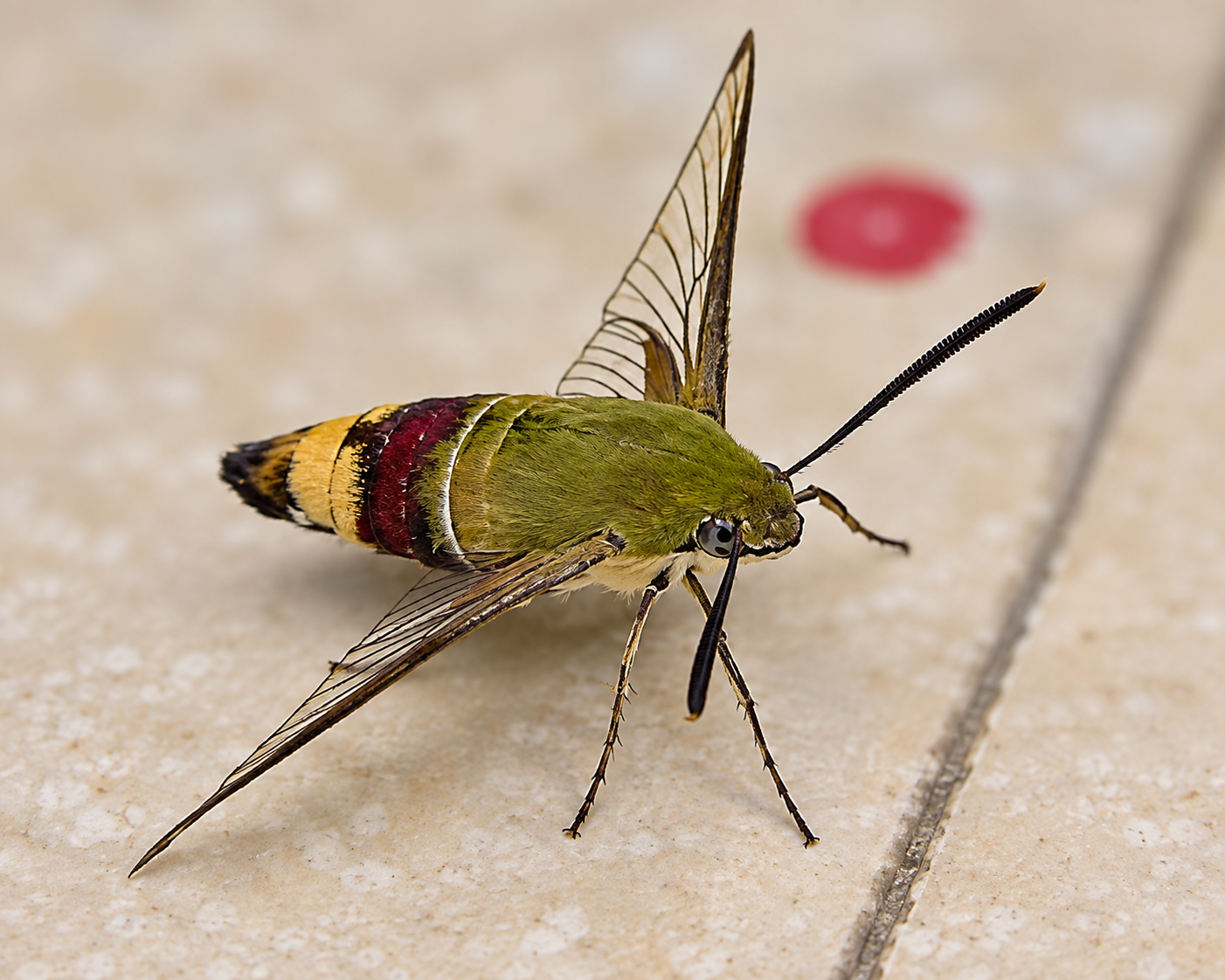
Specimens –Xylocopa latipes (Purple Carpenter Bee); Tabanus striatus (Green horsefly) and Cephonodes hylas (Coffee bee).
Credits- Dr. Yashpal Singh, Mrs. Neena Singh and Mr. Manoj Kumar Yadav