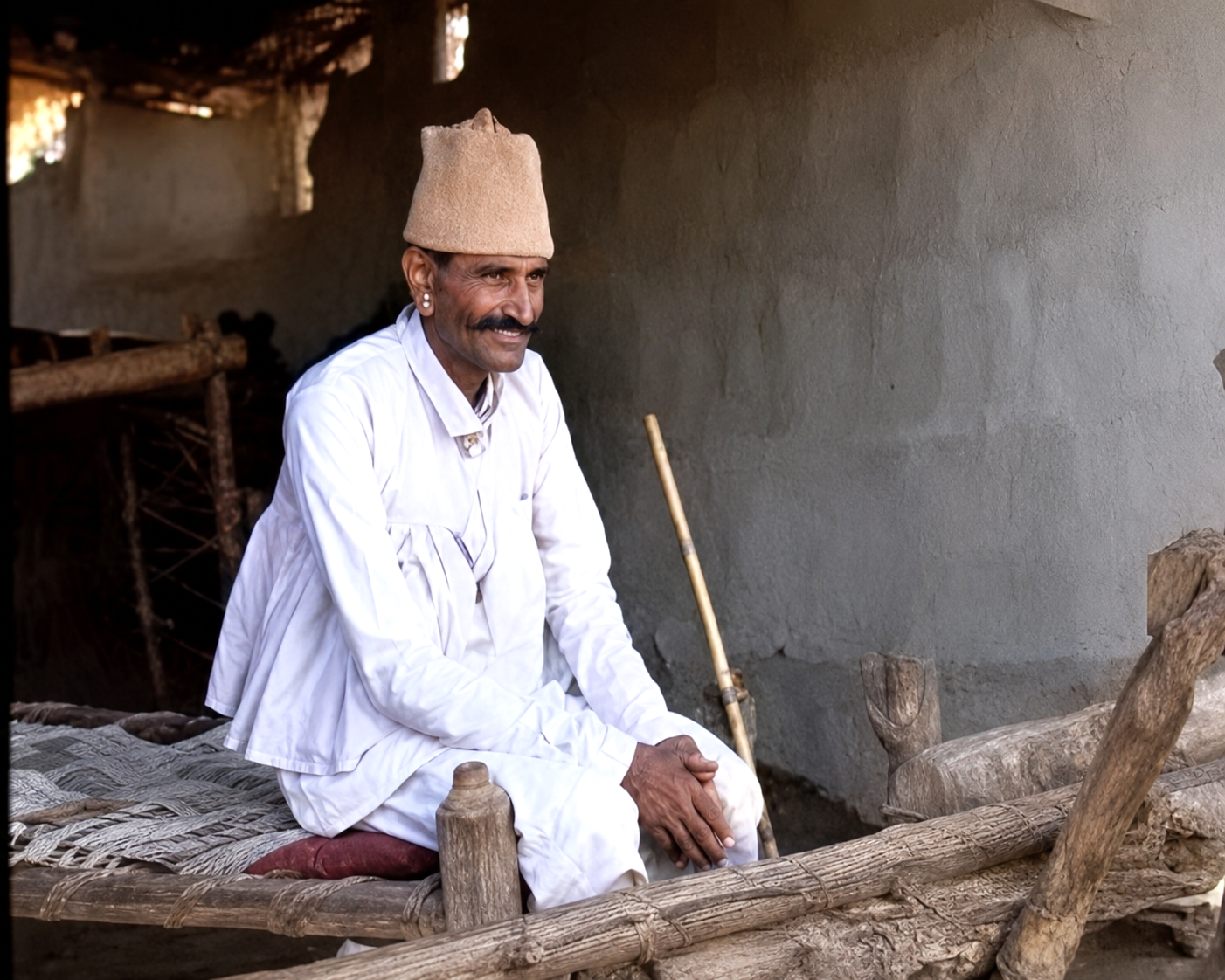

Maldharis- The Nomadic tribe of the Gir Forest. Coexisting with the Asiatic Lion
The Asiatic lion entered India some 40,000 years ago after establishing territories ranging from Saudi Arabia to Pakistan, but gradually disappeared. After the middle of the 19th century the entire species was wiped out except in India where only 12 lions were left in 1880.
The arid and dry deserts of western India have kept herders constantly on the move in search of fodder and good pasture. Intensification of agriculture in the surrounding areas pushed these nomads into the forests, where they started building permanent settlements. Some were also forced to settle in the wilderness by the local inhabitants. These came to be known as the Maldharis, or the owners of cattle. Their history inside the forest is almost 300 years old. They are a set of very beautiful people with sharp features following the Hindu religion. They are worshippers of Lord Krishna.
The main income of the Maldharis is from the sale of milk. They are the oldest group engaged in cattle rearing and consider themselves the protectors of the forest. Their sheds consist mainly of buffaloes, some cows and a few camels. The absence of land ownership encourages the Maldharis to move from place to place within the forest. The Maldharis reside in small clusters of huts made of mud, teak wood, dried leaves and thatch. These clusters are called nesses.
The huts, also housing the cattle, are fenced with timber logs and brushwood. This is a deterrent for lions seeking easy prey. The Maldharis generated considerable income from grazing rights and the sale of milk for the state of Junagarh. They were provided more facilities and allowed to graze more extensively in the forest. The huts are clean and beautifully maintained. The ladies wear colourful dresses, intricately embroidered and engage themselves in various household activities.
Maldhari society is male dominated. Ladies are held in great respect and worshipped as a form of the goddess Durga. Maldharis are fond of ornaments and tattoos. They have a very sensitive relationship with the forest and its surroundings, not only deriving immense benefits from the forest resources, but also losing a few cattle to the lions in the bargain. The Gir forest is one of the largest compact tracts of dry deciduous forests spread over about 1,400 square kilometers and surrounded by a peripheral forest of about 470 square kilometers. It was notified as a sanctuary in 1964 and part of the sanctuary a National Park in 1975. Easily available cattle replaced the natural prey species, which were reducing because of the pressures of hunting and habitat degradation. Vengeful killing of lions became common. Moving from place to place within the forests, the Maldharis caused deforestation and land degradation due to grazing and meeting their requirements of fuel and building material. Fertile topsoil was also removed from the forest floor and used in agricultural fields. Grass production came down and the deer and antelope population was adversely affected. It was then decided to declare a part of the park a national park and free it of Maldharis and cattle gradually to facilitate an easy shift. A number of families were relocated. With the population of cattle coming down, the natural prey base picked up considerably. Consequently, the population of the lions in Gir started registering an increase. Today there are almost 900 Asiatic lions in the Gir Forest at Gujarat in India. This is the only living population of the Asiatic lion in the wild.
©Srimaa Communication
Acknowledgements-Dr. Yashpal Singh, Mrs. Neena Singh, Mr. Rajesh Bedi, Mr. Sunit Tandon and Mr. Manoj Kumar Yadav